
Wildlife Series | Lekule Midwest Safaris
There is something special about seeing an African leopard in the wild. Unlike the lion, which often announces its presence, or the elephant, whose size makes it difficult to miss, the leopard is a master of staying hidden.
With its beautiful spotted coat, powerful body, and incredible ability to move through trees, the African leopard is one of Tanzania's most fascinating animals.
But there is much more to this magnificent cat than its beautiful appearance. Its behaviors reveal an intelligent, patient, and highly adaptable hunter.
Let's get to know the African leopard.
1. A life of independence
Leopards are mostly solitary animals. Unlike lions, which live in prides, adult leopards usually prefer to live and hunt alone.
They establish territories and communicate with other leopards through scent markings, scratches on trees, and distinctive vocal calls.
They generally come together only for mating. A mother leopard, however, spends considerable time raising and protecting her cubs.
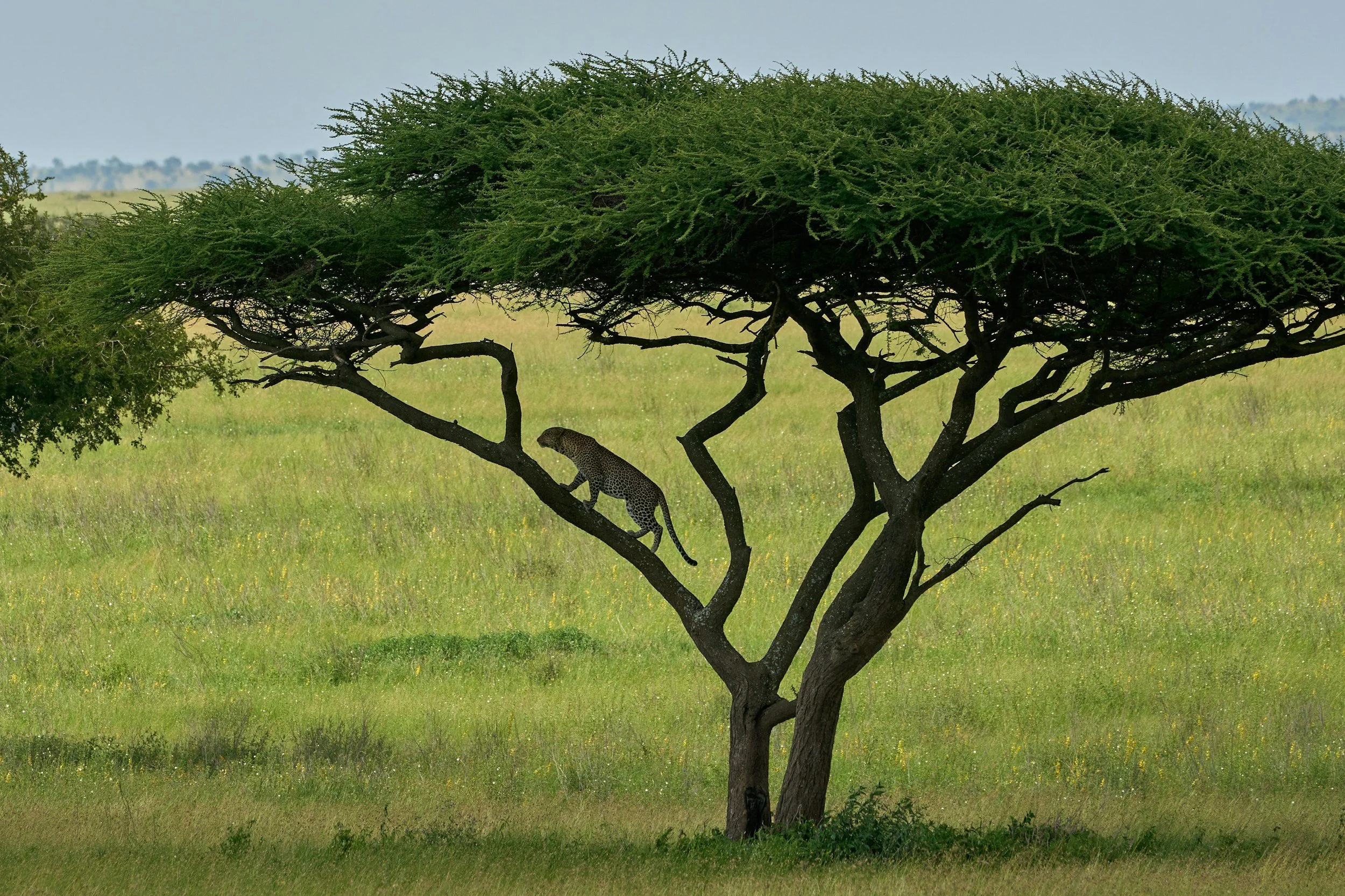
2. The master of climbing trees
One of the leopard's most impressive abilities is climbing.
Leopards are incredibly strong climbers. They can climb trees with remarkable ease, carrying their prey up into the branches.
Why do they do this?
Because life in the African wilderness is competitive. Lions and hyenas may steal a leopard's hard-earned meal. By taking its catch into a tree, the leopard can protect its food and enjoy a meal with fewer interruptions.
You might even find a leopard resting comfortably on a thick tree branch, watching the world below.
3. A patient and silent hunter
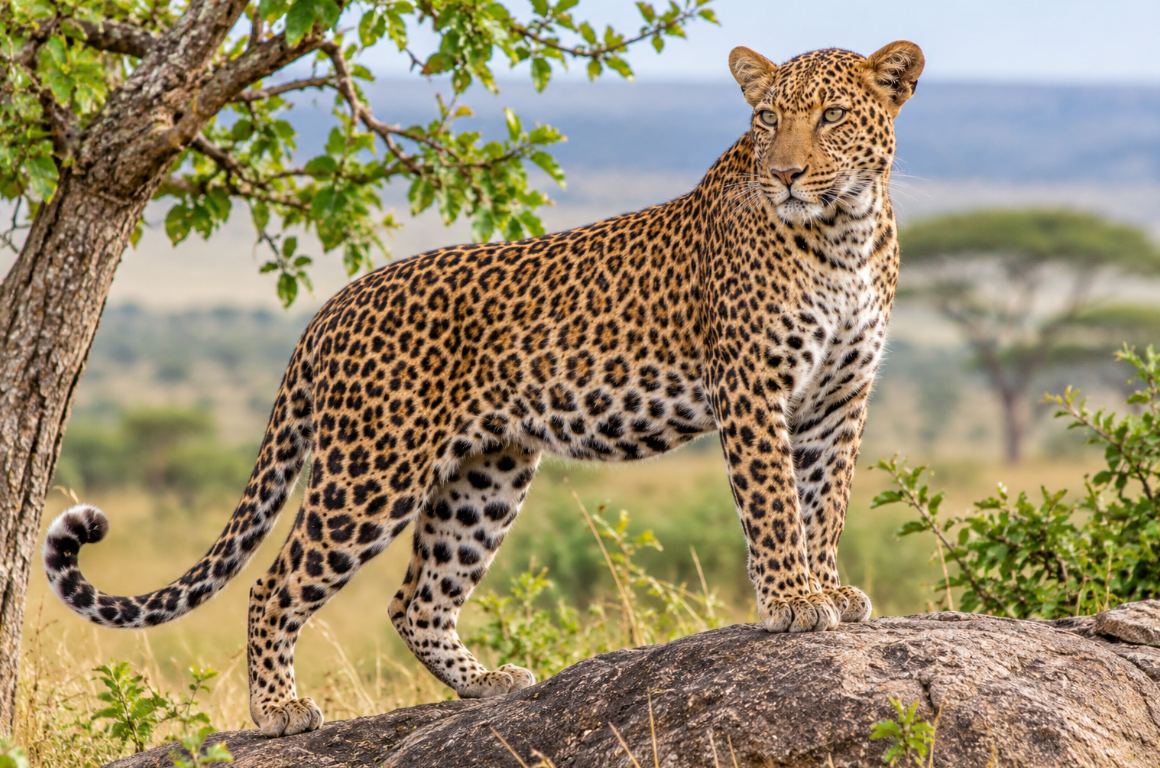
The leopard does not depend on speed alone. It depends on patience, stealth, and timing.
When hunting, it moves quietly through tall grass or thick bushes, keeping its body low and its eyes focused on its target.
It carefully approaches its prey before making a sudden attack.
Unlike animals that chase their prey over long distances, the leopard often relies on surprise.
Its excellent eyesight and hearing help it detect movement, even when its surroundings are difficult to see through.
4. A mostly nighttime traveler
Leopards are generally more active during the night, although they can also be seen during the day.
They often become active around sunset and remain active through the night and early morning.
During the hotter hours of the day, they may rest in the shade, among rocks, or high in the branches of trees.
This is one reason why a leopard sighting during a safari can feel so special. You never quite know when this secretive animal will appear.
5. A mother with a protective heart
Female leopards raise their cubs without help from the father.
When cubs are born, the mother hides them in safe places, protecting them from predators and other dangers.
As the cubs grow, she gradually introduces them to the outside world. They learn by watching their mother, playing, stalking, and eventually practicing their hunting skills.
A young leopard has a lot to learn before becoming independent.
Watching a mother leopard with her cubs is one of the most beautiful wildlife experiences in Africa.
6. Every leopard has a unique coat
Have you ever noticed the beautiful markings on a leopard?
Those dark spots are called rosettes because many of them resemble the shape of a rose.
The patterns help the leopard blend into its surroundings, whether it is moving through grass, bushes, or trees.
No two leopards have exactly the same arrangement of spots, making their coats as individual as fingerprints.
Where can you see African leopards in Tanzania?
Tanzania offers some wonderful opportunities to encounter leopards in their natural habitat.
Some of the places where visitors may see them include:
Serengeti National Park: Particularly around the Seronera area, where riverine forests and large trees provide excellent leopard habitat.
Ngorongoro Conservation Area: Leopards inhabit the woodlands and forested areas of this remarkable landscape.
Tarangire National Park: Its woodlands and river environments provide suitable habitat for these elusive cats.
Of course, wildlife sightings are never guaranteed. That is part of what makes every safari unique.
A special moment in the wild
Imagine driving slowly through the Serengeti early in the morning. The air is cool, birds are calling, and the golden sunlight is beginning to reach the trees.
Suddenly, your safari guide points toward a large branch.
There, resting comfortably above the ground, is an African leopard.
For a moment, everything becomes quiet. You watch as this beautiful animal looks down at the passing world, completely at home in its surroundings.
That is the magic of an African safari. It is not just about seeing animals. It is about witnessing their lives, understanding their behavior, and appreciating the beauty of nature.
At Lekule Midwest Safaris, we believe every animal has a story worth discovering.
Karibu Tanzania — your adventure is waiting.
