
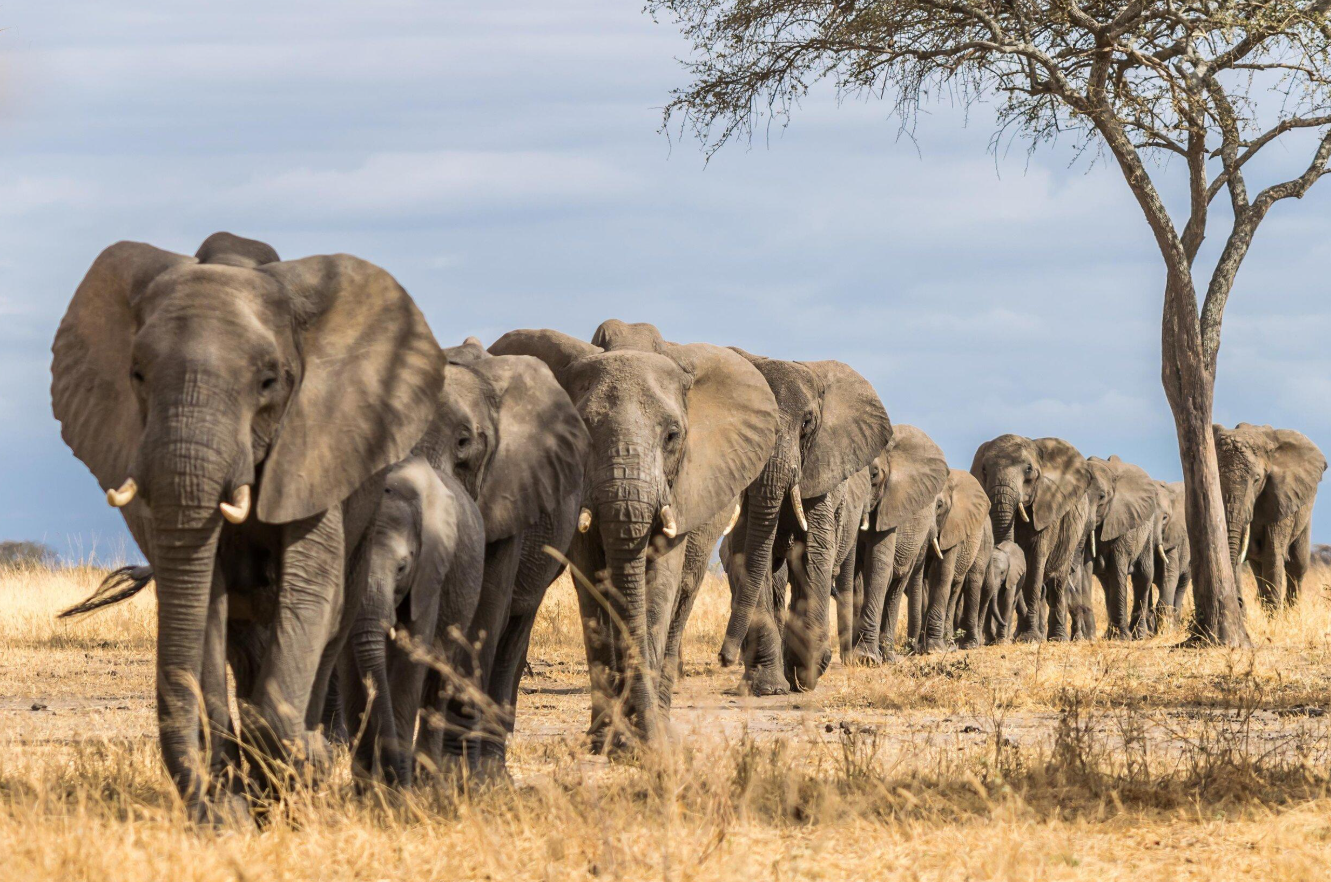
Imagine sitting quietly in a safari vehicle in Tanzania. A family of elephants appears in the distance. One adult walks ahead while the others move slowly through the grass. A young calf stays close to its mother, occasionally touching her with its trunk. Another elephant flaps its ears as the group approaches a patch of trees.
To someone seeing elephants for the first time, these might look like ordinary movements. But if you take time to observe, you begin to discover a fascinating world of family relationships, communication, intelligence, and survival.
The African elephant is one of the most remarkable animals you can encounter on safari. But understanding its behavior makes the experience even more special.
At Lekule Midwest Safaris, I believe a safari is about more than seeing wildlife. It is about learning to appreciate the lives of the animals we are fortunate enough to observe.
Let's take a closer look at what makes the African elephant so extraordinary.
1. Family Comes First
One of the most fascinating things about elephants is their family structure.
Female elephants and their young usually live in family groups led by an experienced older female known as the matriarch. She plays an important role in guiding the group, helping it find food and water, and responding to potential dangers.
Her experience can be especially valuable during difficult times, such as drought, when knowing where to find water and suitable feeding grounds can make a difference to the family's survival.
Young elephants grow up surrounded by relatives. Other females may help protect and care for calves, creating a strong network of support within the family.
Male elephants generally leave their birth family as they mature, although they may continue to associate with other males or return to female groups at certain times.
When you see a group of elephants on safari, remember that you may be looking at much more than a collection of animals. You may be watching a family with relationships, experience, and social bonds that have developed over many years.
2. What Is an Elephant Saying With Its Ears?
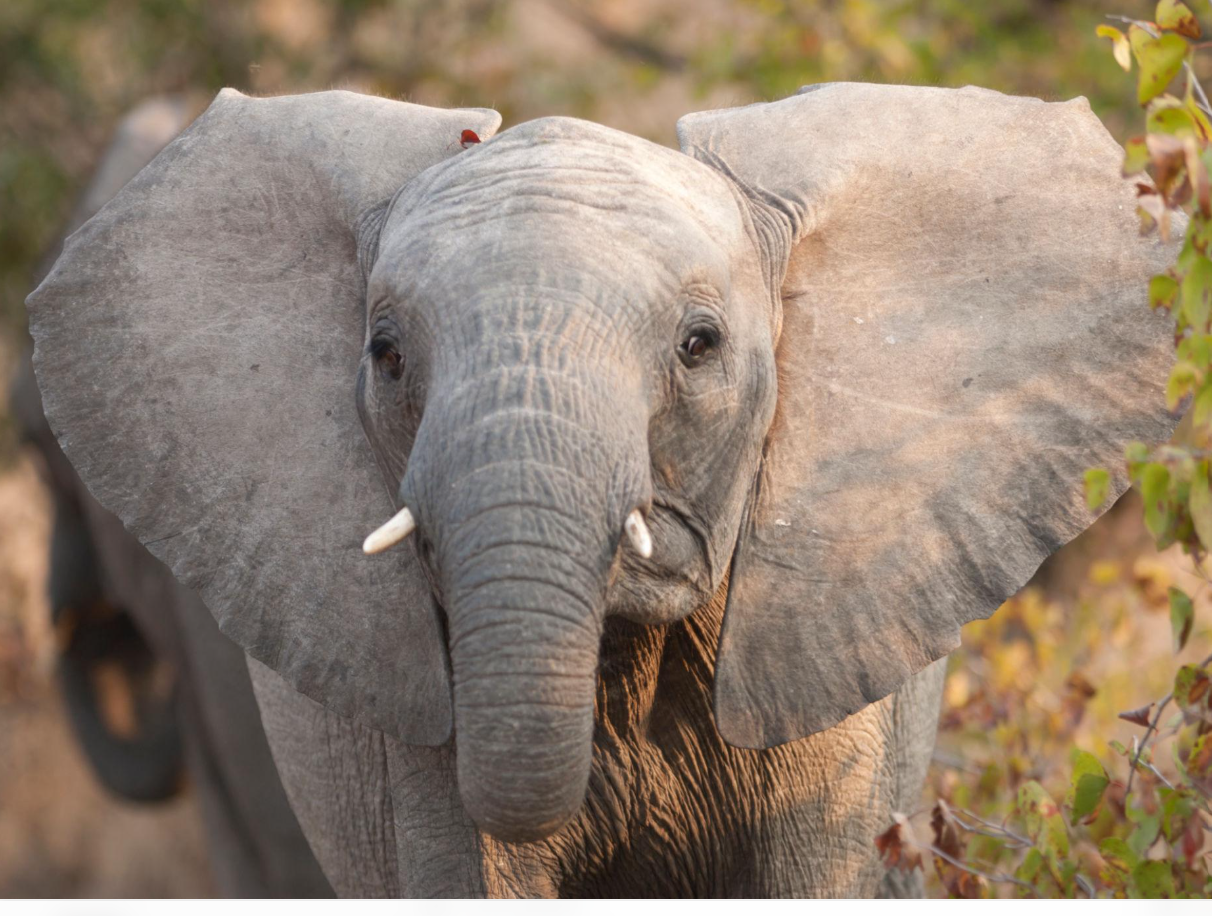
Have you ever watched an elephant spread its ears wide?
Elephants use their ears for several reasons, including regulating body temperature and communicating through body language.
Because elephants live in hot environments, their large ears help release heat. The many blood vessels in their ears allow heat to escape as blood circulates through them.
But ear movements can also provide clues about an elephant's behavior.
An elephant that is relaxed may hold its ears in a natural resting position. An elephant that is alert may raise or spread its ears as it pays attention to something nearby.
When an elephant spreads its ears, raises its head, or makes a sudden movement toward something, it may be displaying a threat or trying to make itself appear larger.
However, one movement does not tell the whole story. You need to consider the elephant's overall posture, the behavior of the other elephants, and the situation around them.
This is one reason watching wildlife patiently can be more rewarding than simply taking a photograph and moving on.
3. The Trunk: Much More Than a Nose
An elephant's trunk is one of nature's most remarkable tools.
It combines the functions of the nose and upper lip and contains an extraordinary arrangement of muscles that allows it to perform delicate and powerful movements.
An elephant uses its trunk to:
Pick grass, leaves, fruit, and other food.
Draw up water and transfer it to its mouth.
Smell its surroundings.
Touch and explore objects.
Communicate through physical contact.
Comfort or interact with other elephants.
Young calves sometimes need time to learn how to control their trunks. You may see a calf swinging its trunk around, touching its own body, or appearing a little clumsy as it explores the world.
Elephants also use their trunks to touch one another, including during greetings and interactions between mothers and calves.
Imagine having one body part that helps you smell, eat, drink, explore, and communicate. That gives you an idea of how important the trunk is to an elephant's daily life.
4. How Do Elephants Communicate?
Elephants communicate through sounds, body movements, touch, and scent.
Some of their vocalizations are familiar to visitors, such as trumpeting. Others are much lower in frequency and may be difficult for human ears to hear.
Elephants can produce low-frequency sounds, including infrasound, that can travel over considerable distances under suitable conditions.
This helps elephants communicate beyond the immediate family group. Researchers have documented elephants responding to calls and using acoustic information to coordinate aspects of their social lives.
They also use touch and body posture to communicate. A mother may touch her calf with her trunk, while adults may greet one another through trunk contact and other gestures.
The next time you see elephants standing quietly together, remember that silence does not necessarily mean they are not communicating.
There may be an entire conversation taking place that you cannot hear.
5. How Do Elephant Mothers Protect Their Calves?
Few wildlife experiences are as moving as watching a young elephant walking beside its mother.
Elephant calves depend on their mothers for milk, protection, and guidance. Other females in the family may also help care for and protect the young.
When a group senses danger, adults may gather closer together, with calves positioned near or among them. Depending on the situation, elephants may stand their ground, move away, or display defensive behavior.
A mother elephant can be extremely protective of her calf. If she perceives a person, vehicle, or another animal as a threat, her response may be unpredictable.
This is why safari visitors must keep a safe distance and follow their guide's instructions. Never approach a calf, attempt to touch an elephant, or position yourself between a mother and her young.
Observing elephants respectfully gives them the space they need to behave naturally.
6. Do Elephants Really Never Forget?
You've probably heard the expression, "An elephant never forgets."
Like many familiar sayings, it simplifies something more complicated.
Elephants have impressive memories and learning abilities. Research suggests that their memory helps them recognize individuals, remember important locations, and respond to familiar voices and situations.
An experienced matriarch may remember where water was found during a previous dry season or recognize the calls of other elephants.
These abilities can be particularly important in environments where food and water availability change throughout the year.
But elephants are not perfect memory machines. Their memories, like those of other animals, have limits.
What makes them remarkable is how learning and memory can support their survival and complex social lives.
7. Why Do Elephants Flap Their Ears?
Elephant ear-flapping is a behavior you may notice frequently on safari.
One important reason is temperature regulation. Moving their ears helps increase airflow and release heat, which is especially useful in hot weather.
But ear movements can also occur during social interactions or when an elephant is alert, excited, or responding to something in its environment.
Context matters. An elephant flapping its ears while feeding is not necessarily communicating the same thing as an elephant spreading its ears, lifting its head, and moving toward a perceived threat.
This is where an experienced safari guide can help you understand what you are observing.
Rather than assigning one meaning to every movement, take time to watch the whole animal and the behavior of the group.
8. Where Can You See African Elephants in Tanzania?
Tanzania offers wonderful opportunities to observe African savanna elephants in their natural environment.
Tarangire National Park
Tarangire is particularly well known for its elephants and iconic baobab trees. During parts of the dry season, wildlife gathers around the Tarangire River and other available water sources, creating excellent opportunities for observation.
Serengeti National Park
The Serengeti is famous for its open grasslands and migrating wildebeest, but elephants also inhabit parts of this remarkable ecosystem.
Ngorongoro Conservation Area
Elephants can be seen in parts of the Ngorongoro Conservation Area, where forests, grasslands, and other habitats support diverse wildlife.
Elephant sightings are never guaranteed, and their movements depend on season, habitat, water, and food availability. Your guide can help choose suitable areas based on your travel dates and interests.
9. How to Observe Elephants Responsibly
A memorable safari is not about getting as close as possible to a wild animal. It is about experiencing wildlife without disturbing it.
When observing elephants:
Remain inside your safari vehicle unless your guide identifies a safe, permitted place to leave it.
Follow your guide's instructions at all times.
Keep a respectful distance and never block an elephant's path.
Avoid shouting, sudden movements, or actions intended to attract an animal's attention.
Never attempt to feed, touch, or approach a wild elephant.
Give elephants additional space if they show signs of agitation or defensive behavior.
Responsible wildlife viewing helps protect both visitors and the animals they have come to admire.
A Final Thought
The African elephant is more than a giant roaming the savanna. It is an intelligent, social animal with family relationships, remarkable physical abilities, and behaviors shaped by its environment.
When you understand a little about elephant behavior, a safari becomes something deeper than a list of animals you have seen.
You begin to notice the mother staying close to her calf, the experienced female leading her family, the trunk exploring a branch, and the subtle movements that reveal an animal responding to the world around it.
These are the moments that can stay with you long after your journey ends.
At Lekule Midwest Safaris, I want travelers to experience Tanzania not only through its beautiful landscapes and incredible wildlife, but also through a greater appreciation of the animals that call it home.
Because the more we understand wildlife, the more we appreciate why it deserves our respect and protection.
Karibu Tanzania — your adventure is waiting!
Did You Know?
An elephant's trunk contains tens of thousands of muscle units and can perform both powerful and extremely delicate movements. Elephants use it to smell, gather food, drink, explore, and interact with other elephants.
Frequently Asked Questions
Are African elephants intelligent?
Yes. African elephants demonstrate complex learning, memory, social behavior, and problem-solving abilities.
Do elephants live alone?
Female elephants and their young generally live in family groups. Adult males often spend more time alone or associate with other males.
Why do elephants flap their ears?
One major reason is to help regulate body temperature. Ear movements can also be part of communication and responses to the environment.
Are elephants dangerous on safari?
They are powerful wild animals and can be dangerous, especially if they feel threatened. Following your guide's instructions and maintaining a safe distance are essential.
Where is the best place to see elephants in Tanzania?
Tarangire National Park is particularly well known for elephants. Sightings are also possible in the Serengeti and parts of the Ngorongoro Conservation Area.
Godlove's Journal
Growing up in Tanzania, wildlife was part of the country I called home. Living in the United States has given me another perspective on how special it is to experience these animals in their natural environment.
When I think about a safari, I think about more than taking photographs. I think about the opportunity to slow down, observe, ask questions, and discover things we might otherwise overlook.
That is what I hope to share through Lekule Midwest Safaris. I want visitors to see Tanzania's wildlife with curiosity and respect, and to leave with a deeper appreciation for the country and its natural heritage.
Swahili Word of the Day
Tembo — Elephant
In Swahili, tembo means elephant. It is a useful word to learn before your safari.
The next time you are in Tanzania and your guide points out an elephant, you can say, "Nimeona tembo!" — "I have seen an elephant!"
A small phrase can make your travel experience even more meaningful.
